
QUARTERLY UPDATE
AUTUMN 2026
John Wesley, Oxford—and an alumnus’ new book
Just around the corner from Westminster Seminary UK's new home on St Michael's Street in Oxford stands a building with a remarkable place in the history of evangelical Christianity.
At 32–34 New Inn Hall Street—Oxford’s first Methodist meeting house—a plaque records that John Wesley preached there on 14 July 1783 and on several subsequent occasions. Wesley himself described it as “a lightsome, cheerful place”.
Wesley's connections with Oxford went back much further. As a student at Christ Church and later a Fellow of Lincoln College, he became a leading figure in the small group nicknamed the ‘Holy Club’, whose commitment to prayer, Bible study and works of mercy helped give rise to Methodism. His earliest preaching took place in Oxfordshire, traditionally associated with the village of South Leigh. Later, at the University Church of St Mary the Virgin, he preached his celebrated sermon on ‘Scriptural Christianity’ (1744), challenging the spiritual condition of the University.
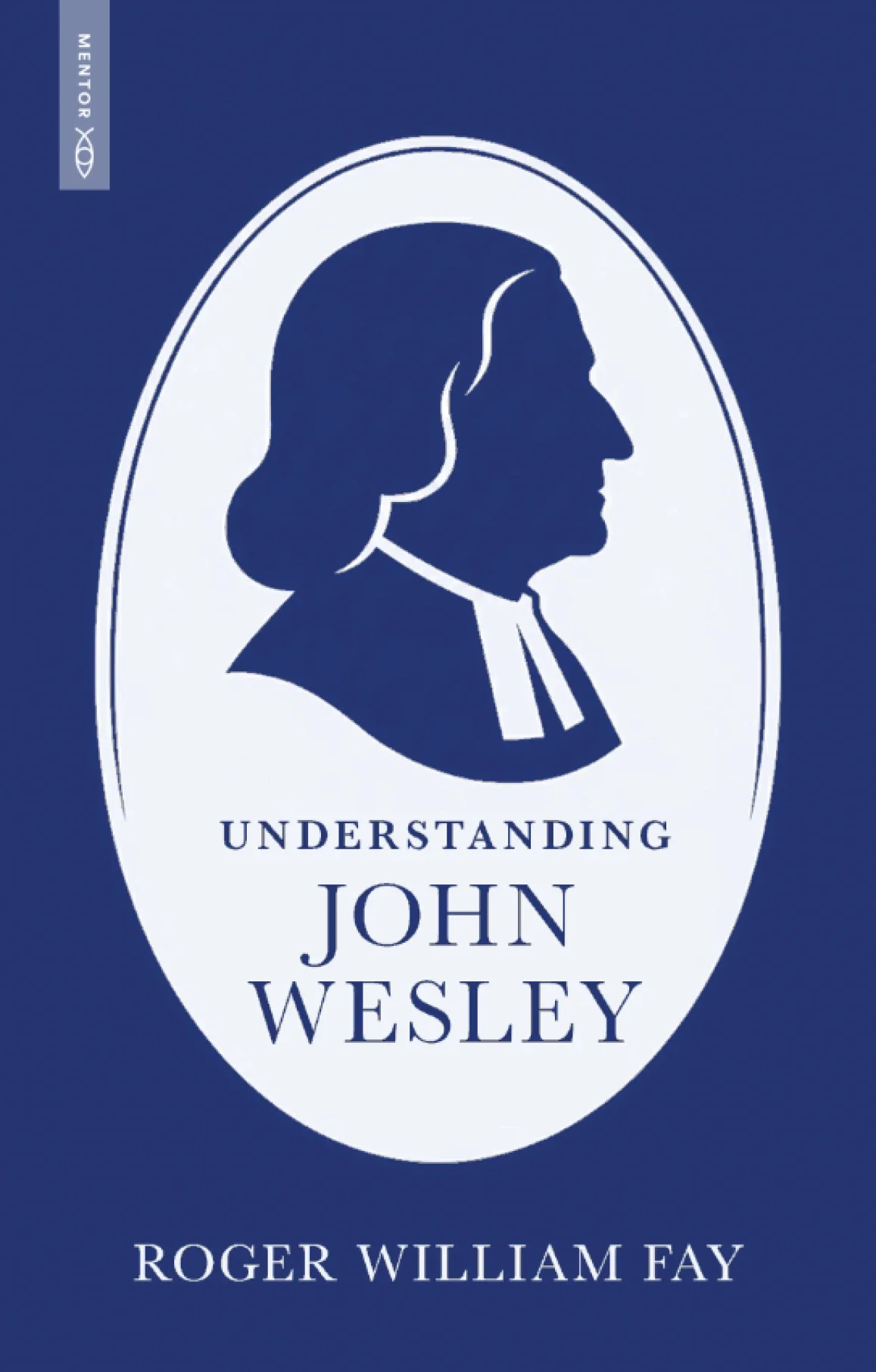
It is fitting, then, that as Westminster establishes its new home in Oxford, we can celebrate the publication of Understanding John Wesley: Reassessing His Faith, Theology, and Legacy, by former Westminster ThM student Roger Fay.
Published by Mentor (Christian Focus) in July 2026, Roger's book grows out of his ThM thesis, The Faith of John Wesley. It explores Wesley's spiritual journey, his early formation in the devout Epworth Rectory, his conversion experience at Aldersgate in 1738, and his understanding of justification, assurance and holiness. Roger writes with historical care and theological discernment, seeking to understand Wesley sympathetically without overlooking the doctrinal differences between Wesleyan and Reformed theology.
“I am deeply grateful to the Lord and to Westminster Seminary UK for the privilege, over 2020 to 2022, of researching John Wesley’s understanding of faith. This I could undertake because of the expert tuition of Drs Ian Hamilton and Ryan McGraw.
“It has been a great blessing to focus on the primacy of justification by faith in the gospel of Jesus Christ, and to trace the astonishing providence of God in the salvation and ministry of John Wesley.”
For Westminster, the publication is a welcome example of theological study bearing fruit beyond the classroom. Our desire is not merely that students acquire knowledge, but that their scholarship should serve Christ's Church. Roger's new book illustrates that ambition well.
Starting with the Standards:
Opening Week with Dr Chad Van Dixhoorn
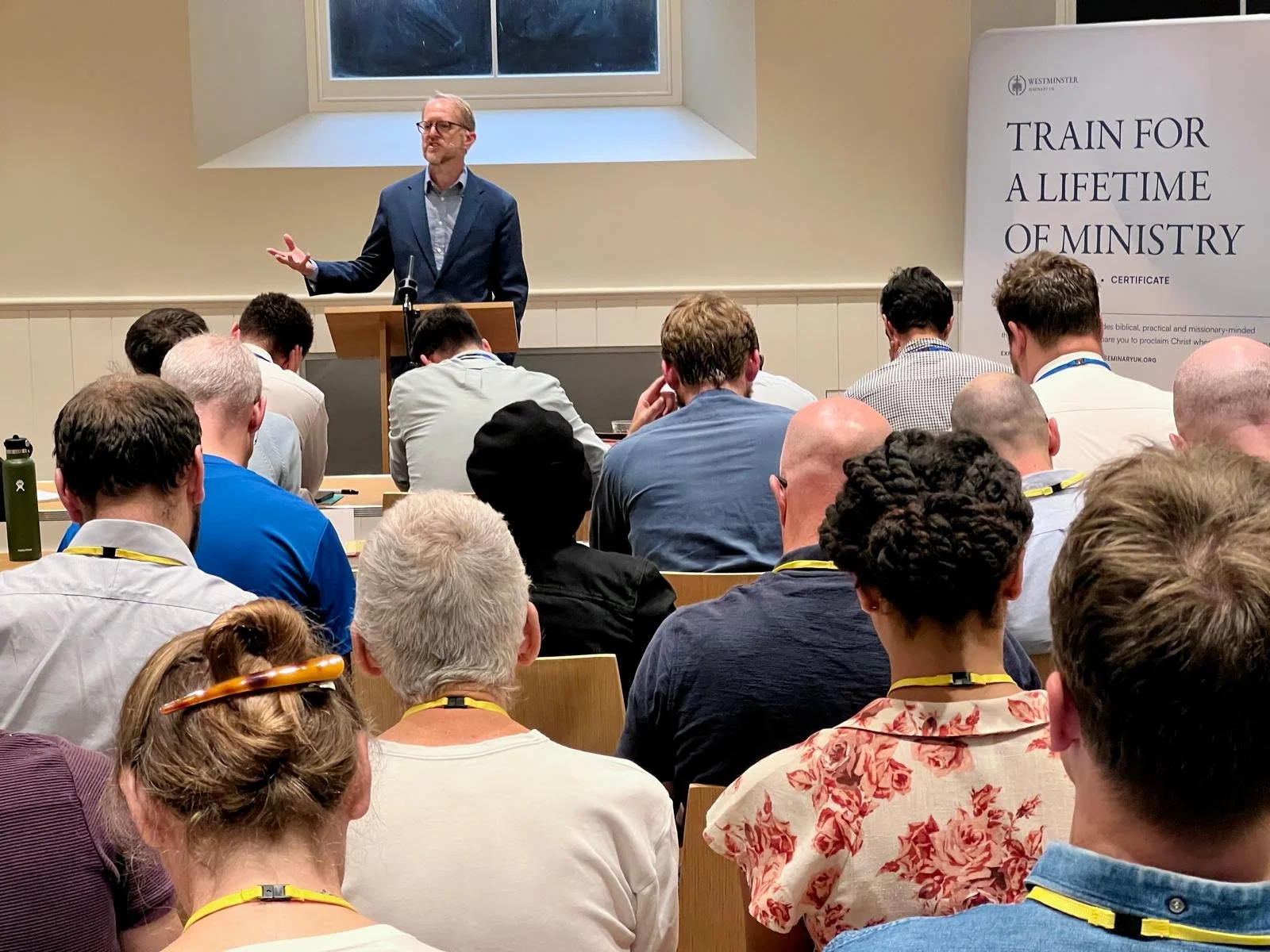
Westminster Seminary UK marked its relocation to Oxford in a particularly appropriate way: with four days immersed in the Westminster Standards.
As many of you will appreciate, the Westminster Standards are a collection of 17th-century confessional documents that summarise Reformed Christian theology and church practice, including the Westminster Confession of Faith and the Larger and Shorter Catechisms.
Fifteen of our students were joined by thirty five delegates from various denominations across the UK and beyond for an inaugural teaching week in St Michael’s Street. The setting was significant: Oxford has played its own remarkable part in the story of English Christianity, and the Seminary’s new home stands close to places associated with the Oxford Martyrs and, later, John Owen.
Yet the purpose of the week was not principally to look backwards, but to ask what the theology hammered out at Westminster Abbey in the 1640s continues to offer the Church today.
Teaching was provided by Dr Chad Van Dixhoorn, Professor of Church History and Theology at Reformed Theological Seminary, Charlotte, US, and an advisor to Westminster Seminary UK. Few scholars are better placed to teach on the subject. His five-volume edition of The Minutes and Papers of the Westminster Assembly, 1643–1652, published by Oxford University Press, established him as one of the leading authorities on the Assembly, and led to his election as a Fellow of the Royal Historical Society.
Dr Van Dixhoorn has described the Westminster Confession as “a banquet of Biblical teaching”, and the course demonstrated why. The Confession is not simply a catalogue of doctrines, but a remarkably integrated account of the Christian faith: scripture leading to God and His works, covenant and Christ, salvation and the Christian life, the church, and finally resurrection and judgement. Throughout the week, Dr Van Dixhoorn reminded us that grasping the truths contained in the Confession should lead to doxology, to worship: “You’ve got more to praise God about when you begin to understand that justification is an umbrella term for two distinct benefits: that God saves you from your sins, and that He imputes Christ’s righteousness to you.”
Some of the history behind the Westminster Confession is equally illuminating. The Assembly initially met in Henry VII’s Chapel at Westminster Abbey, before moving into the Jerusalem Chamber when the weather became colder. More significantly, the Confession was first presented to Parliament without its familiar Scripture proofs. Parliament subsequently required the Biblical references, which the Assembly supplied in 1647. The episode is a useful reminder that a Reformed confession possesses no independent authority: its claims must always be tested and owned from Scripture itself.
There is pastoral wisdom here too. Westminster’s treatment of assurance, for example, is strikingly realistic. Assurance may be strong and well-grounded, yet the Confession also recognises that a genuine believer may have it “shaken, diminished, and intermitted”. Seventeenth-century precision was not intended to produce cold theology, but to give careful Biblical help to troubled consciences. Again and again the Standards show doctrine serving worship, holiness, consolation and perseverance.
The week concluded with a joyful graduation ceremony, as we celebrated the graduation of Samuel Schaffner with a Master of Divinity (MDiv) and Ben Cadoux-Hudson with a Master of Arts and Religion (MAR).
Westminster’s faculty is united in subscribing to the Westminster Confession as a faithful summary of Scripture’s doctrines with a clear vision for Christian life and ministry. Our prayer is that this will bring a coherence to the curriculum as well as a sense of connectedness with the church of Christ in every age. Please pray that our students will be enriched, equipped and enthralled with the Lord Jesus Christ as they study at Westminster UK.
This story is adapted from the original article published by Evangelicals Now on 24th September 2026.
“Am I called to the ministry?”
Nick’s Story
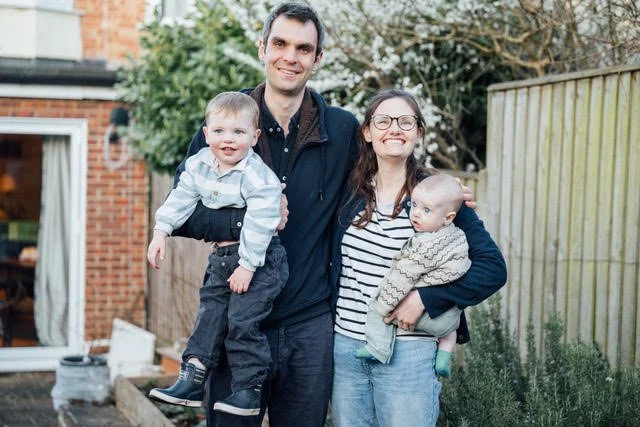
A year ago Nick was working as a gardener at Wadham College. Today, he’s a first-year student on our Master of Divinity programme. How did he discern the call to ministry, and how did he end up studying at Westminster?
“I had a sense in my undergraduate years that the Lord might be calling me,” he says. “But I didn’t act on it immediately, and for that I’m glad.”
Teaching was in the family; Nick’s father was headmaster of Magdalen College School and of Winchester College. Nick himself taught for ten years, and looking back he sees how the experience corrected some early assumptions.
“I had so elevated the ministry that I risked not seeing the holiness of ‘ordinary' callings—teacher, doctor, bin man…. In God’s kindness, serving as a teacher undid some of that poor theology. I had an unhealthy understanding of how God changes people—I thought that if I just take my Bible away by myself for a weekend, I will find the verse of Scripture that speaks to me, and that will give me a supercharged faith. But since getting married, and through our new church, my wife Becky and I have begun to see how God’s means of transforming us are far more ordinary: taking place within the Church, through the preaching of His Word, and through the Holy Spirit’s work within His people.”
With his family growing and his wife Becky working part-time as a doctor, Nick wanted to free up family time—and return to study. He switched to gardening, and embarked on Westminster Seminary UK’s Diploma in Biblical Studies.
The year proved unexpectedly formative. “I think I learned as much in my one year as a gardener as my ten years in teaching!”
He experienced hard manual labour in all weathers, serious conversations about faith – and simply being immersed in the created world.
“There’s a glory to working outdoors. The natural revelation of God’s goodness is impressed upon you every day!” Gardening gave Nick a picture of pastoral ministry: being entrusted with something precious, serving faithfully, nurturing patient growth rather than expecting instant results.
Meanwhile, the desire for ministry continued to deepen. His pastor preached through Exodus 3, and he recognised something of himself in Moses’ reluctance – and in the Lord’s patience with him.
He began speaking seriously with his pastor, who asked a formative question: ‘How much do you love the local church?’ His elders gave him opportunities to lead Bible studies and preach, so that his gifts could be tested.
As he searched his heart and motives to enter the ministry, Nick felt a growing sense of love for Christ’s people and a desire to serve them, allied with the sense of compulsion behind Paul’s exclamation”: ‘Woe to me if I don’t preach the gospel!’
There was an Oxford twist to his first opportunities. His church, Oxford Presbyterian Church, stands opposite the Oxford Union, which regularly hosts controversial speakers (like Charlie Kirk, a fortnight before his murder). Twice he had to project his voice over angry protestors in the road outside. “Sadly, they weren’t protesting about me,” he admits. That time may yet come!
When his elders supported his application, he took the step into full-time training.
“It was a wrench to leave gardening,” he says. “But this was something I had wanted for ten years.”
A month and a half into the MDiv, how is he finding things?
“Joyfully overwhelming,” he reflects. “There is a lot of work, but it is collegial.”
“In my first course, Dr Van Dixhoorn took us all out for a meal at the pub. It didn’t in any way diminish his authority as an expert in his field, but it did picture Christian fellowship integrated with study.”
That integration matters to Nick. The teachers, he says, have not been distant academic figures. "They’re keen to help on a personal level. There’s an absence of snobbery, which is refreshing.”
But ultimately, it's the subject of study that provides the joy.
“I study to know God better. Our life's purpose is ‘to glorify God, and fully to enjoy him forever’.”
It is still early days, but the different strands of Nick’s story—teaching, gardening, the local church and theological study—are beginning to look less like detours and more like preparation for the ministry of God’s Word.
Planting for the future: The Oxford Church Planting Institute takes shape
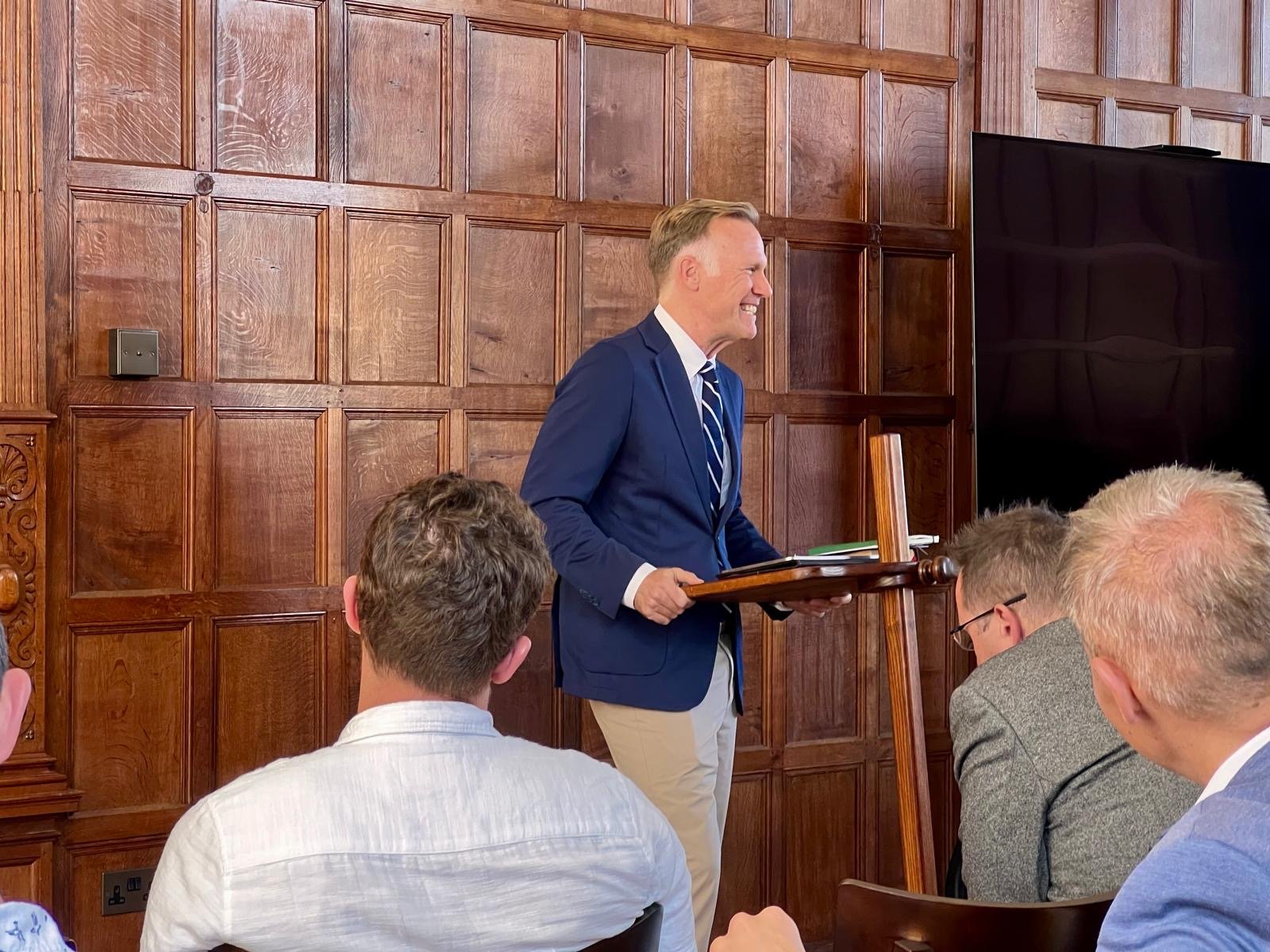
Plans for a new Oxford-based institute to equip church planters across Britain and Europe were the focus of a gathering of ministers and theological educators in August, as Westminster Seminary UK began a process of consultation with church leaders.
Hosted at Yarnton Manor on 25–26 August, the inaugural Roundtable of the Oxford Church Planting Institute (OCPI) brought together Presbyterian and Reformed Baptist leaders from across Britain and continental Europe, with eight nations represented.
The Institute's launch is planned for August 2027, and the gathering provided a welcome opportunity to seek the wisdom of experienced church planters, give thanks for God's work in establishing churches, and consider how best to prepare and encourage others for faithful gospel ministry.
Setting out his vision, the Institute's Director, Rev Dr Jon D. Payne, stressed that faithful church planting depends not on human ingenuity but on Christ's promise to build his Church. The ordinary means of grace—the Word, sacraments and prayer—must remain central. He also encouraged us with the reminder that, “The mission of the Church is to go and make disciples. But the imperative ‘go’ is bookended by two indicatives: ‘All authority in heaven and earth has been given to me’, and, ‘I am with you always’.”
The Institute will seek to equip men practically and theologically for the demanding work of establishing biblical, confessional churches. Alongside this training a cohort experience will build enduring friendships for the years ahead.
Some of the most memorable contributions came from ministers already serving on the front line. Peter Szabo (Budapest), Mike Brown (Milan), Gethin Jones (Lille) and Andy Young (Oxford) spoke candidly about the challenges and joys of church planting: the false starts and painfully slow growth, the financial uncertainty, the pressures on their family. Yet a common conviction emerged: the Lord builds His Church through the faithful ministry of His Word. As Gethin Jones reflected on the beginnings of the church in Lille, “The Word did the work.”
The Roundtable was deliberately conceived as a listening exercise rather than the unveiling of a finished programme. The insights gathered from our time together will help shape a proposed one-year certificate course combining theological and practical instruction, mentoring by experienced church planters, and opportunities for international fellowship.
We are grateful to God for the fellowship, wisdom and encouragement shared over these two days. Conscious of the scale of Europe's spiritual need, and of our complete dependence upon the Lord of the harvest, we pray that He will be pleased to use this new initiative to strengthen His Church and equip men to serve Him faithfully for years to come.
The Glory of Christ: Westminster’s 2026 Annual Conference
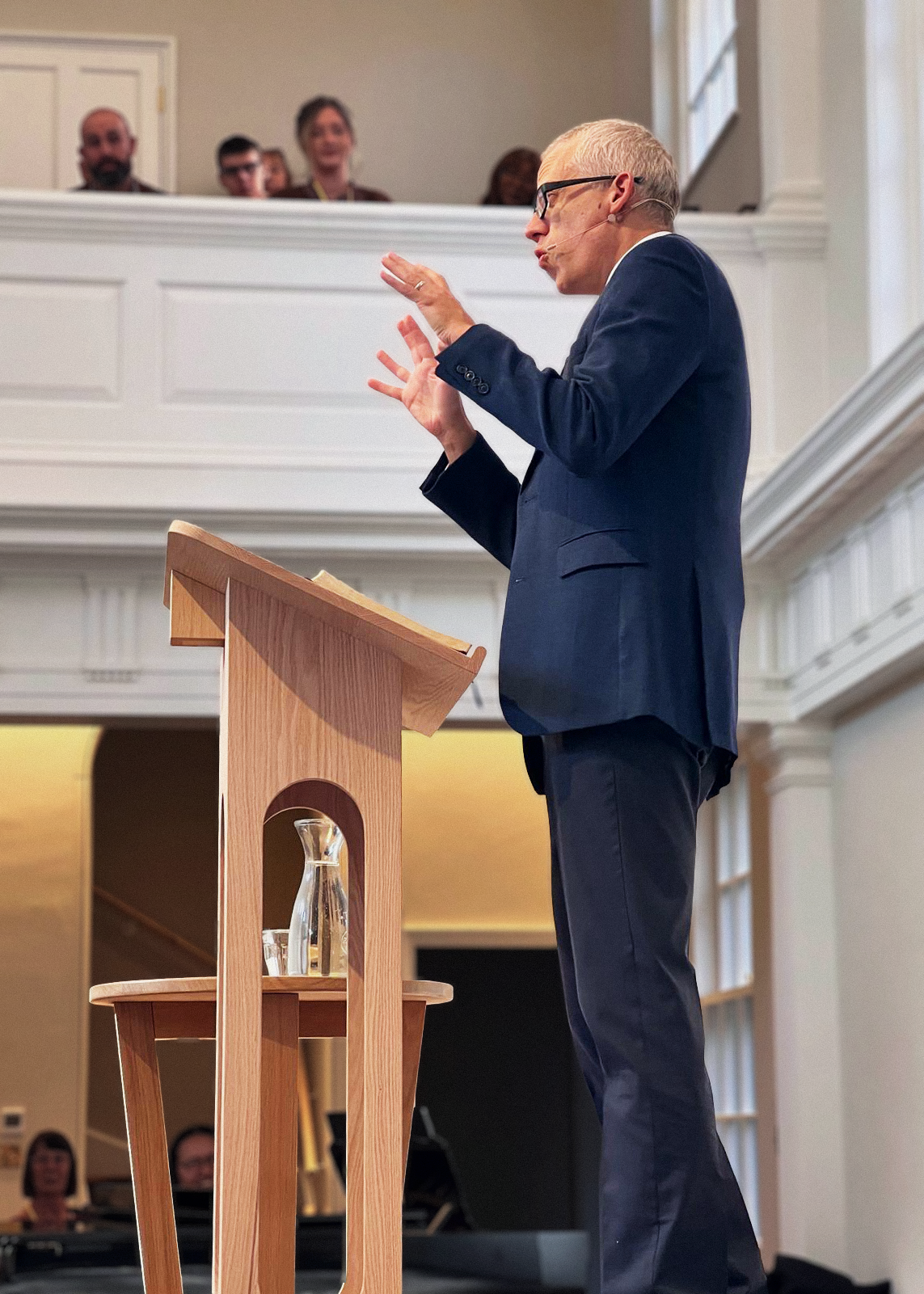
The One upon whom the curse of God fell is the eternally blessed Son of God; the One who died on the cross is the Author of life.
Westminster Seminary UK’s 2026 annual conference, The Glory of Christ, was held for the first time in Oxford this October. Over three days, delegates were invited to contemplate the beauty, majesty and saving work of the Lord Jesus Christ—our good, gracious and glorious King.
Kevin DeYoung opened the conference with the wonder of the incarnation: the eternal Son of God became what He was not without ceasing to be what He was. Christology, he reminded us, is never merely an intellectual exercise; its proper end is worship. Turning to Christ’s impeccability, he demonstrated how the sinless Saviour’s genuine temptations deepen rather than diminish our confidence in His sympathy and saving power.
Jonty Rhodes explored Christ’s glory in two paradoxes: The Glory of the Blessed, Cursed and The Glory of the Immortal, Killed. At Calvary the blessed Son bore the curse, and the immortal Son, having taken our nature, submitted Himself to death. In a particularly memorable image, Rhodes reminded believers that the full weight of divine judgement has fallen upon Christ; what remains for His people is only its shadow.
Christopher Ash opened up the psalms as a window onto Christ’s emotional life: his struggles and temptations, his delight in the creation he had spoken into existence, his zeal for God’s glory. Christ is both the ravishing bridegroom of Psalm 45 and the ascended King of Psalm 24—in whom we too may ‘ascend the hill of the Lord’. Our President, Donald John MacLean, directed attention to Christ’s compassion—his tears over Jerusalem and his continuing ministry as our sympathetic High Priest—before turning to the glorious hope of his return.
A historical address from Jon Payne traced the life and ministry of Dr Martyn Lloyd-Jones, while Friday’s seminars explored preaching Christ from the Psalms, the gospel in Joshua, and – in a particularly well-received session led for the women by Carolyn Ash – how we may treasure Christ through life’s changing seasons.
Alongside the main addresses delegates enjoyed opportunities for fellowship, student-led prayer, and panel discussion.
The gathering concluded with a service of thanksgiving for the Lord’s goodness towards Westminster UK as it begins this new chapter in Oxford. Kevin DeYoung preached on The Mission of Christ and Our Mission, drawing the conference towards its fitting conclusion: lives devoted to Christ’s service.
Addresses will shortly be uploaded to our website; in the meantime we give thanks to God for a refreshing three days, and pray that the truths proclaimed will bear lasting fruit in a deeper love for Christ and a renewed commitment to making Him known.
This story is adapted from the original article published by Evangelical Times in November 2026.
Thank you
It has been a momentous last quarter for the seminary, and we praise God for all the ways He has provided for us, encouraging us through your prayers and generous support. As the Lord Jesus reminds us, apart from Him, we can do nothing – and we long to remain in Him and in His Word, so that we might bear fruit in our efforts to raise up and send out men to strengthen His Church.
As always, thank you for your partnership. It is our joy to do this vital work together with you and your support.
Please continue to pray for us as we journey through our first term in Oxford: that we would prepare our students faithfully, secure the funds we need to continue our work, and step faithfully into all that the Lord has prepared for us to do (Ephesians 2:10).